Patient education: Deep Brain Stimulation surgery
A cross-disciplinary sprint to improve education for movement disorder patients preparing for Deep Brain Stimulation surgery, applying human-centred and service design principles to translate clinical insights into patient-facing solutions. In association with the Dublin Neurological Institute (DNI), the Mater Misericordiae Hospital and NCAD.
Role
Service designer
Industry
Public healthcare
Duration
1 week • 2025
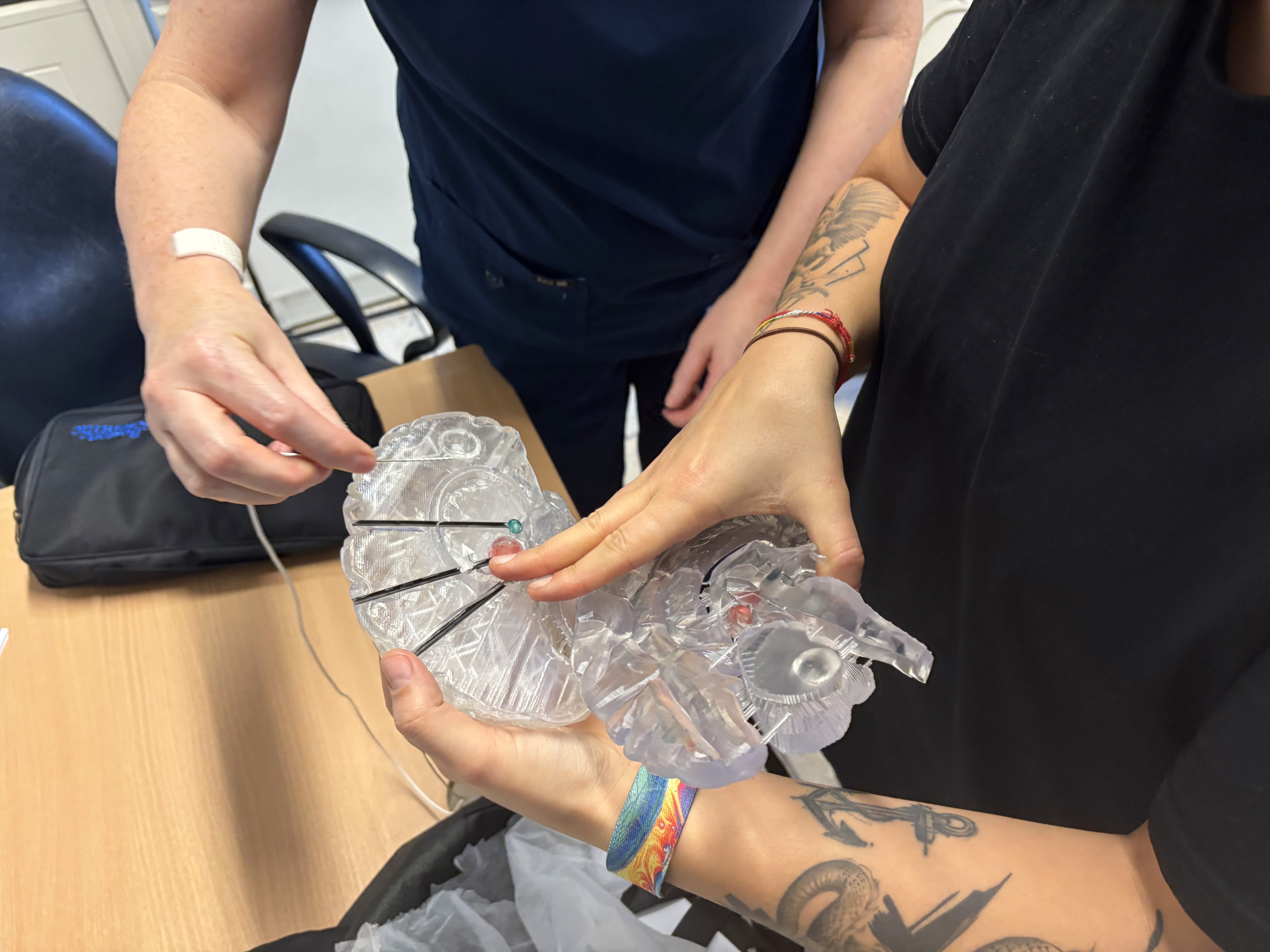
Prototype testing with 3D brain model
Overview
Deep Brain Stimulation surgery (DBS) is a neurostimulation surgery offered to patients with Parkinson’s and other movement disorders. An electrode planted in the brain stimulates three target areas, relieving tremors. This design sprint focused on bridging the gap between complex neurosurgery, clinician consultations and patient understanding of Deep Brain Stimulation surgery through co-design.
Goal
To support clearer conversations, reduce patient anxiety, and improve decision-making by redesigning the education touchpoints around DBS surgery. The focus was on clarity, emotional reassurance, and efficiency across the patient consultation journey.
Constraints
Severe time pressure limited access to stakeholders, pushing prioritisation and a lean design approach.
Research
An ethnographic research approach was taken to understand the consultation space, tools and environment that both clinicians and patients interacted with. By observing and interviewing both clinicians and patients in the consultation space, we grounded the service in real needs rather than assumptions.
4 x contextual interviews
Patient and clinician journey map
Ecosystems map

Clincians draw on white boards to explain DBS surgery.

Clinicians use their own bodies to demonstrate where electrodes enter the brain.
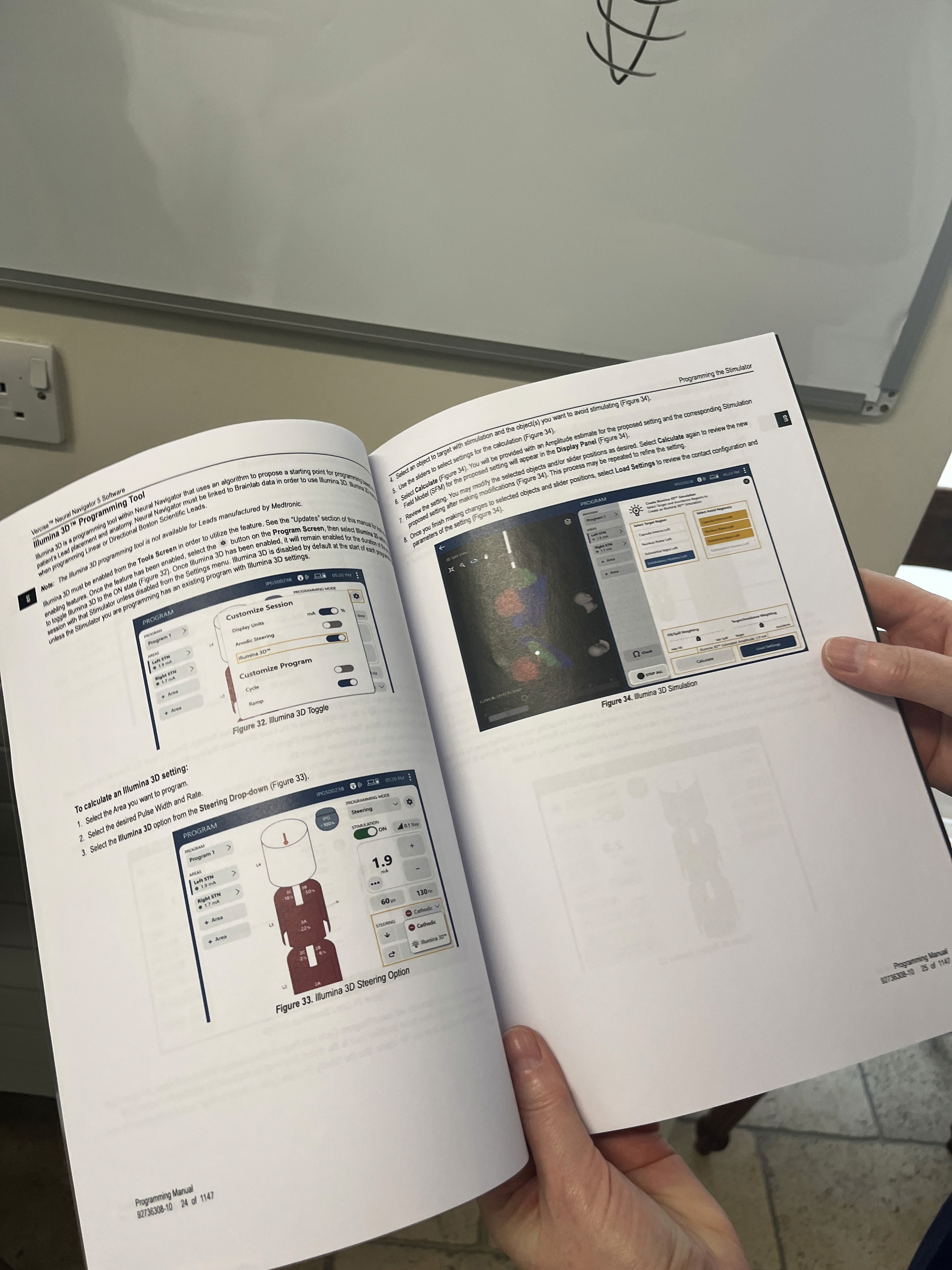
Information is outdated and complex.

Current state blueprint
Key insights
Connection
Drawing to connect with patients was important to retain.
Confidence
Overwhelm
Clinicians reported that patients don't tend to read printed materials due to already overwhelming information.
Service users
People living with Parkinson’s and movement disorders for at least 5 years. Typically, the efficacy of their medications have reduced therefore they are exploring new options to manage the disease. The Dublin Neurological Institute (DNI) processes on average 180 referrals for DBS per year where about 80 patients elect for the surgery.

Service user persona
Hypothesis
Clear, well-designed visual aids would reduce patient anxiety, shorten consultations, improve patient confidence in choosing surgery and offer clinicians new ways to translate abstract details of the surgery.
Ideation
I led an ideation session with my team utilising 'how might we questions' to co-create multiple concepts grounded in shared clinician and patient insights.
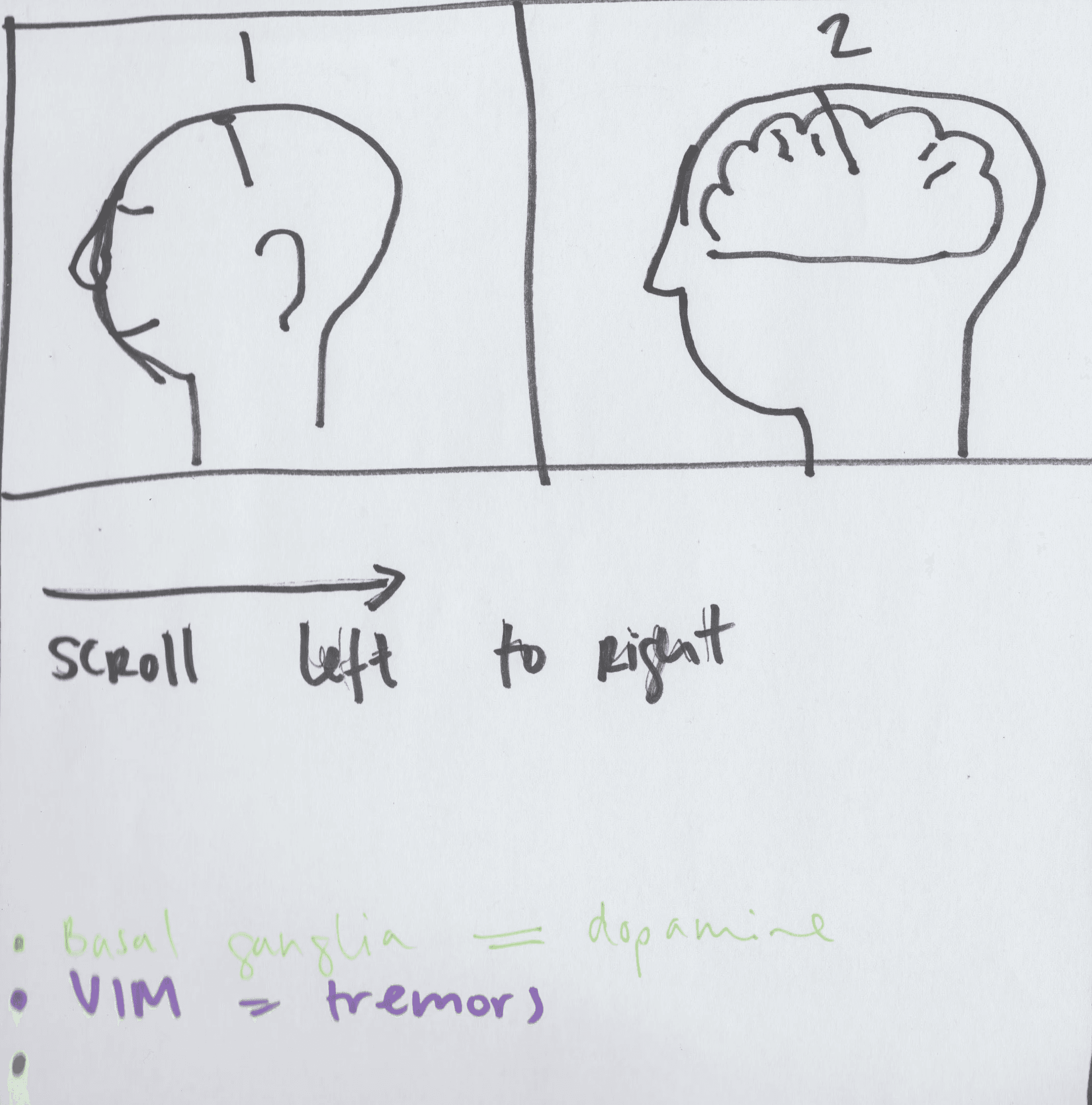

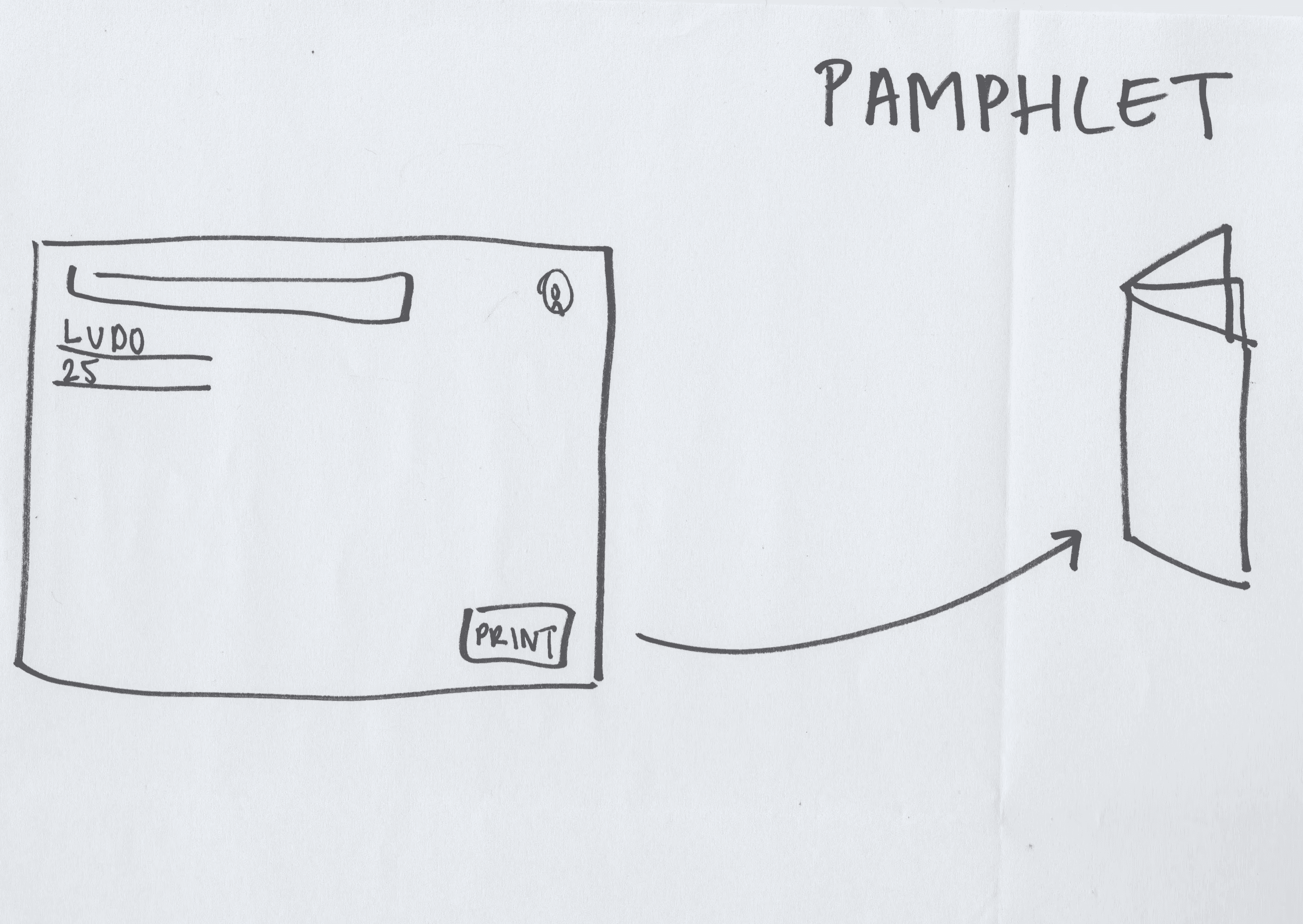
Reusable imagery supporting layered explanations and visual clarity while avoiding intimidating medical imagery.
3D brain model
A tactile 3D brain model humanising the service, helping patients ask better questions, and removing the strain from clinicians using their own bodies.
Pamphlet
We challenged the assumption that take-home materials don't work, exploring personalisation as a way to relieve recall for patients.
Prototyping and testing
We rapidly prototyped and tested low-to-mid fidelity tools with clinicians - a reusable image template and a 3D brain model - integrating clinician feedback to refine solutions that fit naturally into the consultation service without overwhelming patients.

Testing imagery with clinicians

Sample imagery
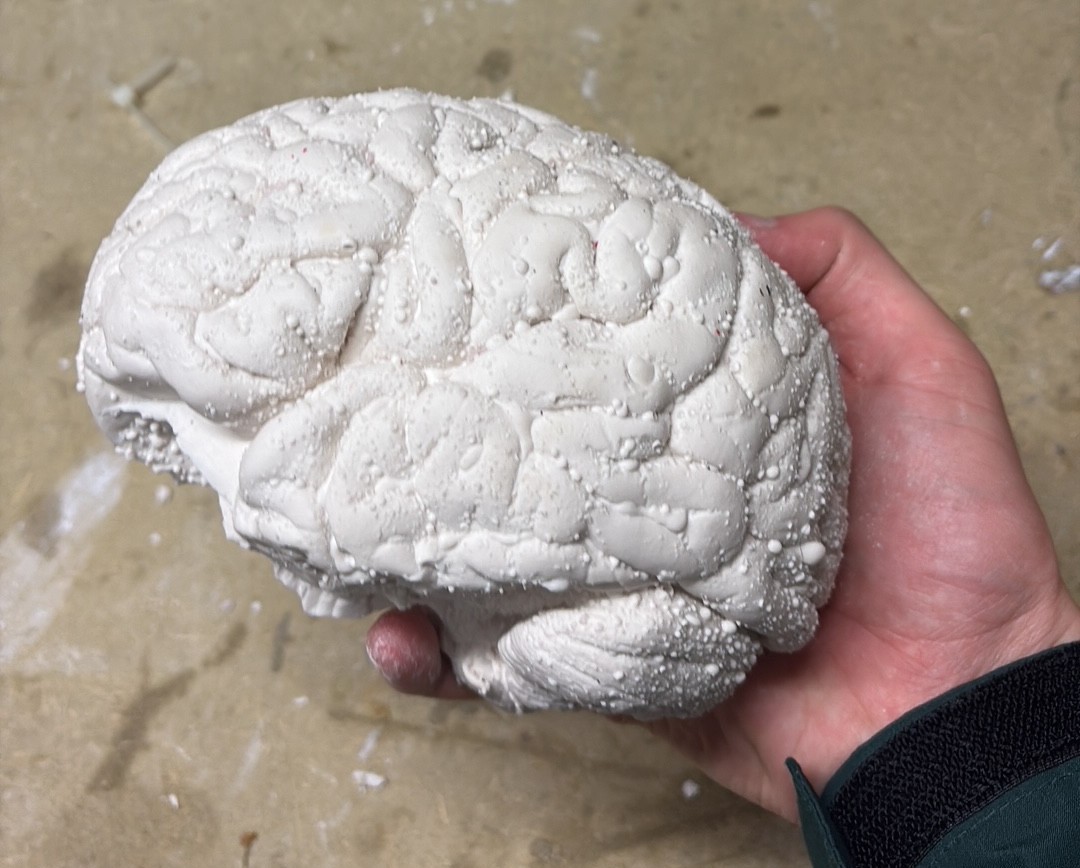
3D brain mould
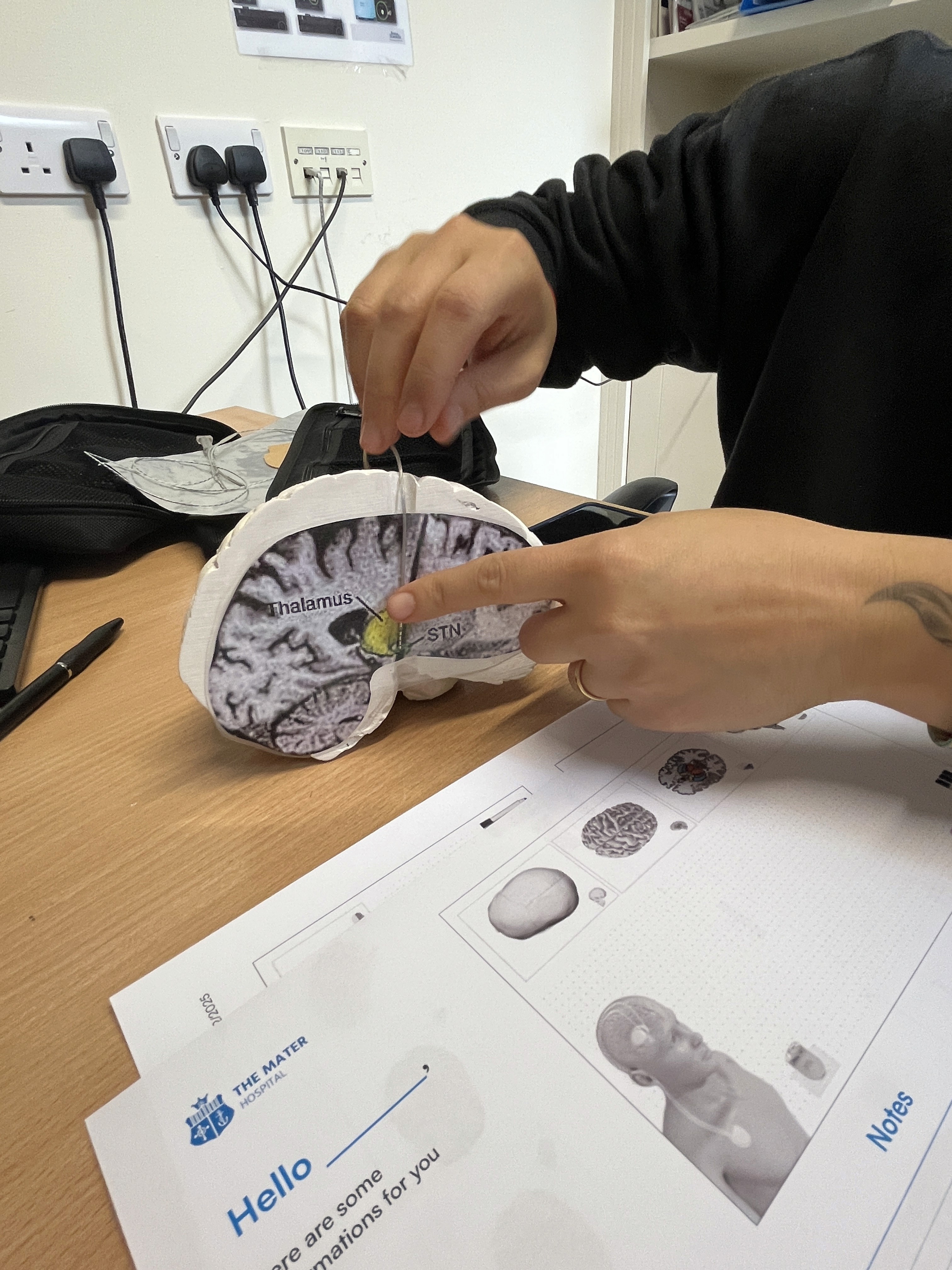
Testing 3D brain model with clinicians
Service user feedback
Real consultations validated that the tools supported understanding without influencing patient autonomy. Both patients and clinicians responded positively to tools that made the invisible visible and the service more humane.
Final visuals

Reusable image template

3D brain model

Personalised pamphlet
Presentation
I created a presentation framing the project within the wider healthcare ecosystem to show organisational, not just service user-level, value, which was delivered to 200 medical and design professionals at The Mater Misercordiae Hospital.